Total Cost of Ownership: Why High-Quality Rubber Parts Save You More in the Long Run
October 28, 2025
Types of Coupling Spiders – Everything You Need to Know
November 10, 2025 Dhaval Jani
on
Dhaval Jani
on
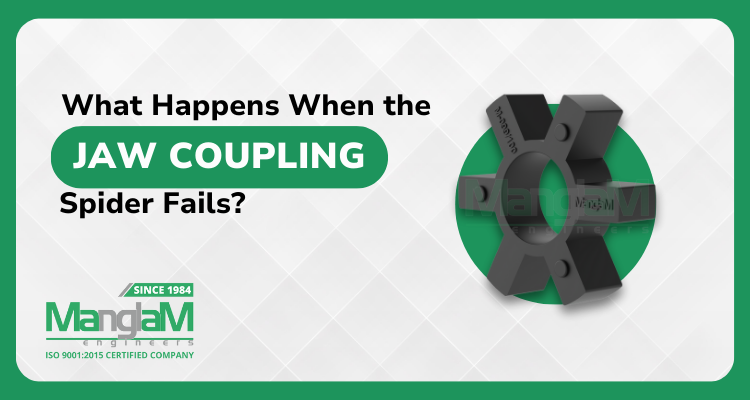
When a jaw coupling spider fails, the immediate result is a total loss of shock absorption. This leads to loud, harmful noise as the metal jaws come together at high speed. The resulting vibration can cause severe shaft damage and costly, unplanned downtime for your machinery.
That small elastomer insert is critically "fail-safe" for your entire drive system. Its failure is a major warning sign that something else is wrong, such as severe misalignment, shock-loading, or chemical attack. It's designed to be the final part to protect your more expensive components.
As leading manufacturers of industrial couplings, Manglam Engineers know how to prevent this failure. This guide will cover the warning signs, the root causes, and the exact steps to protect your equipment.
What is a Jaw Coupling Spider?
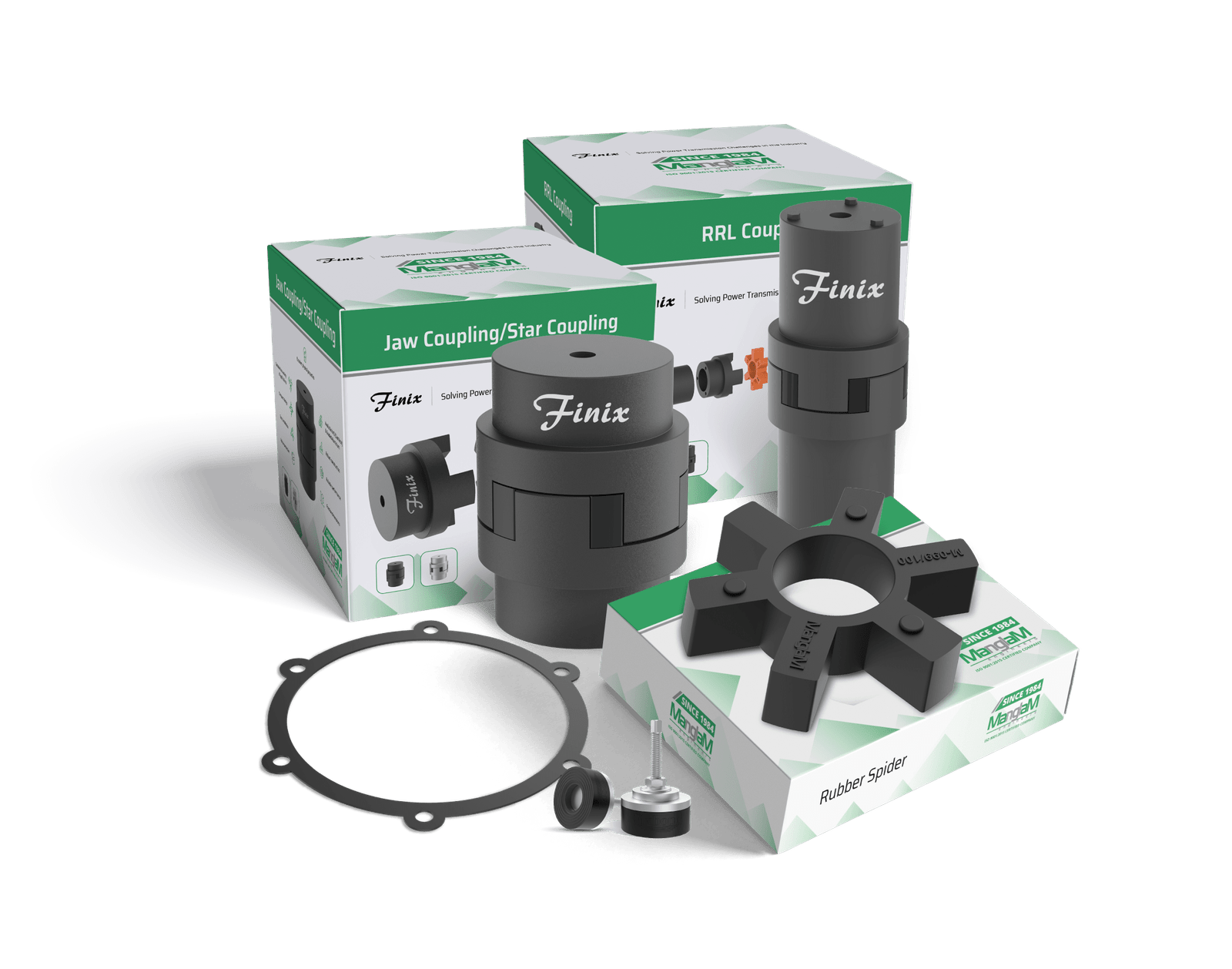
A jaw coupling spider, also known as an elastomeric insert, is the flexible component that sits between the two metal hubs (or "jaws") of a jaw coupling. It's typically made of materials like NBR, Nitrile, Urethane, or PU.
This simple part has several incredibly important jobs.
What Does a Coupling Spider Do?
The spider is the main component of the coupling. Its primary functions are to:
- Absorb Shock & Vibration: It controls rotary vibration and absorbs shock loads (like a sudden start or jam), protecting the motor and machinery.
- Transmit Torque: It is the medium that transmits rotational power from the driver's shaft (e.g., a motor) to the driven shaft (e.g., a pump).
- Compensate for Misalignment: It provides a flexible bridge that can accommodate slight angular, parallel, and axial shaft of misalignment.
- Act as a Mechanical "Fuse": This is its most critical safety function. The spider is designed to be a sacrificial part. It fails first to protect your much more expensive components - like motors, gearboxes, shafts, and bearings from serious damage.
What Are the Warning Signs of a Failing Spider?
Your coupling will almost always give you warning signs before a complete breakdown. Ignoring these alert signs is what leads to major jaw coupling failure.
If you notice any of the following, shut down the equipment and inspect the coupling immediately.
Strange Noises: What to Listen For
A failing spider is often heard before it's seen. Listen for:
- Loud Vibrations or Clunking: This is especially common in machine start-ups or shutdowns. It indicates the spider has become hard and brittle or has chunked missing, allowing the metal jaws to make intermittent contact.
- High-Pitched Squealing: This can be a sign of a "gummy" failure, where the spider material is melting or degrading due to chemical or heat exposure, causing it to slip against the jaws.
Visual Signs: What to Look For
When you remove the coupling guard for a preventive maintenance (PM) check, look for these tell-tale signs:
- "Elastomer Dust": This is a classic symptom. You'll see a fine powder (often black, red, or yellow) collected on the inside of the coupling guard. This is the spider literally breaking down from excessive wear, usually caused by misalignment.
- Cracks and Missing Legs: Visible cracks, fractures, or "chunking" where entire legs of the spider have been torn off are obvious signs of impending failure.
- Deformation or "Gummy" Texture: If the spider looks melted, swollen, or unusually soft, it's likely failing due to chemical attack or overheating.
Physical Signs: What to Feel (Safely)
These symptoms will be obvious even while the machine is running:
- Sudden Increase in Vibration: This is the most common physical symptom. As the spider loses its dampening ability, vibration increases dramatically. This hits the "jaw coupling vibration problems" that many operators search for.
- Excessive Heat: Place your hand near (don't touch) the coupling guard. If it feels unusually hot, the friction from the failing spider or metal-on-metal contact is generating extreme heat.
Why Do Coupling Spiders Fail?
Spiders rarely fail for no reason. Simply replacing a failed spider without finding the root cause just means you'll be replacing it again in a few weeks.
This is the core of jaw coupling problems.
1. Bad Shaft Alignment
This is, without a doubt, the number one killer of coupling spiders. Jaw couplings are flexible, not universal joints. They are designed to handle slight misalignment.
- Parallel Misalignment: The shafts are parallel but not on the same centerline. This creates a shearing, side-to-side stress that "chews up" the spider.
- Angular Misalignment: The shafts are at an angle to each other. This causes the spider's legs to flex and bend excessively with every rotation, leading to fatigue failure.
- Axial Misalignment: The shafts are too far apart or too close. This either stretches the spider or compresses it, both of which lead to premature failure.
2. Too Much Force or Sudden Shocks
Every spider has a specific torque rating. A sudden jam in a pump or conveyor, or a very hard motor start, can create a shock load that exceeds this rating.
This can damage a hard, brittle spider (like Hytrel) or twist a softer, high-dampening spider (like NBR) completely out of shape.
3. Chemicals, Oil, or Dirt
The wrong spider material for the environment is a guaranteed failure.
Oils, solvents, and hydraulic fluids can break down NBR (Buna-N) material. Caustic chemicals in a process plant can be eaten away at Urethane. If the spider becomes "gummy," soft, or swollen, you have a chemical compatibility problem.
4. Using the Wrong Type of Spider
Using the wrong spider for the job is a very common mistake. An engineer may have chosen a soft, high-dampening spider for a high-speed, high-torque application, causing it to fail from heat and torque.
This is where understanding spider materials is critical.
What Happens When the Spider Completely Breaks?
So, the warning signs were missing and the spider completely failed. What happens in that split second?
1. The "Fuse" Blows: The spider fails or is ejected. The elastic is no longer separating the two metal hubs.
2. Metal-on-Metal Contact: The driver-side hub (jaw) smashes into the driver-side hub. This is the loud grinding, banging, or screaming noise you hear. This immediately destroys the precision surfaces of the jaws.
3. The Ripple Effect: Your flexible coupling is gone. You now have a very bad, rigid coupling. This transmits massive, unfiltered shock loads and vibration directly to the motor and the driven equipment.
4. The Final Damage: This is how you break a pump shaft, destroy a motor bearing, or shatter a gearbox internally. The machine will fail or stop.
How to Replace a Failed Spider (and stop it from Happening Again)
Replacing the spider is easy. Doing it correctly so it doesn't fail again is the hard part.
Step 1: Stay Safe (Lockout-Tagout)
Safety first. Always disconnect and lock out the power source before removing any guards or touching the equipment.
Step 2: Check How the Old Spider Failed
Don't just clean out the debris. Look at the way the spider failed.
- Is it shredded into "dust"? That's a misalignment problem.
- Is it shattered into hard pieces? That's a shocking problem.
- Is it melted or "gummy"? That's a chemical or heat problem.
- Are the legs twisted? That's an over-torque problem.
Step 3: Check the Metal Jaws for Damage
This is the most skipped step. If the spider failed completely, the metal jaws made contact. You must inspect the hubs.
Are the jaws cracked, rounded over, or worn? If they are, you must replace the entire coupling (e.g., a new Manglam Engineers Jaw Coupling).
Putting a brand-new spider between two damaged, worn-out hubs is a guaranteed repeat failure. The new spider will be destroyed in hours.
Step 4: Install the Correct New Spider
Ensure you're replacing the failed part with a high-quality spider of the correct material and durometer for the application. (Reference to the material types listed earlier).
This is the time to source a durable rubber spider or Normex Type Spider from a trusted supplier to match your exact operational specs.
Step 5: Align the Shafts (The Most Important Step)
This is the most crucial step for prevention. You must re-align the equipment.
Use a laser alignment tool for the best results. At a minimum, use a straightedge and feeler measure to get the shafts back into as perfect alignment as possible. This one step is the #1 way to ensure a long coupling lifespan.
A Small Part Can Cause a Big Problem
A jaw coupling spider failure is more than an inconvenience; it's a critical system warning. It's the "check engine" light for your mechanical power transmission.
By understanding the signs of wear, diagnosing the root cause, and prioritizing proper alignment, you can turn this failure to point into a reliable part of your preventive maintenance program.
At Manglam Engineers, we don't just supply parts; we provide power transmission solutions. We manufacture a complete range of industrial couplings, from Jaw Couplings and Tyre Couplings to Pin Bush Type Couplings, along with the high-quality elastomer inserts that keep them running.
Ready to Skip Your Next Failure?
- Need help diagnosing a recurring coupling problem? Our technical team can help you identify the right coupling and spider material for your specific application, from HVAC systems to heavy-duty industrial pumps.
- Request a quote todayto secure your spare parts inventory and prevent costly downtime before it happens.
Frequently Asked Questions (FAQs)

Dhaval Jani
Managing Director at Manglam Engineers
Dhaval Jani is the Managing Director of Manglam Engineers , a trusted manufacturer of transmission couplings and rubber parts. With a background in mechanical engineering and extensive industry experience, he leads the company’s focus on product innovation, manufacturing excellence, and global business growth.