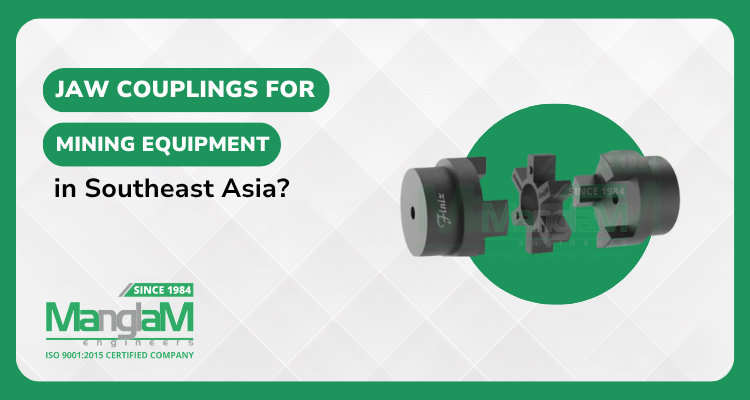
Jaw Couplings for Mining Equipment in African Industries
April 10, 2026
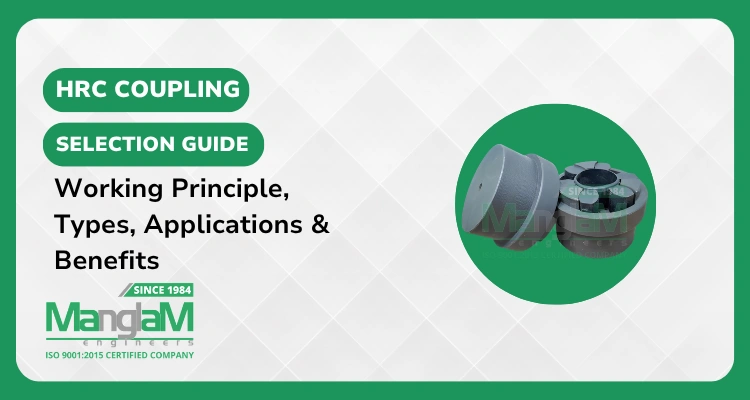
HRC Coupling Selection Guide: Working Principle, Types, Applications & Benefits
September 16, 2026 Dhaval Jani
on
Dhaval Jani
on

Dhaval Jani
Managing Director at Manglam Engineers
Dhaval Jani is the Managing Director of Manglam Engineers , a trusted manufacturer of transmission couplings and rubber parts. With a background in mechanical engineering and extensive industry experience, he leads the company’s focus on product innovation, manufacturing excellence, and global business growth.
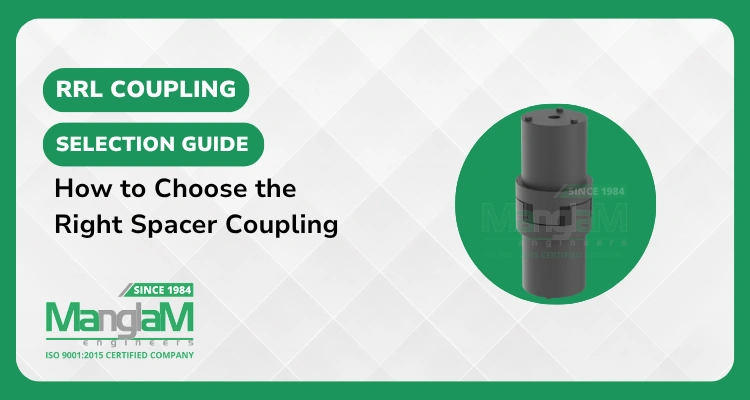
A coupling can transmit the correct torque and still be the wrong choice for your pump or generator set if it does not give you the maintenance access your equipment layout needs. An RRL coupling provides a radially removable, spacer-style connection that can simplify disconnection and maintenance access. In pump applications, the correct spacer arrangement can provide access for service work without shifting the motor, depending on the pump design and coupling configuration.
Sizing the spacer correctly requires more than matching bore diameters. Torque, RPM, DBSE, misalignment, and duty cycle all affect whether the coupling performs reliably or becomes a recurring maintenance issue.
This guide walks through how an RRL coupling works, what to check before selecting one, how it compares to other Manglam Engineers coupling types, and what information helps confirm the right size for your application.
Key Takeaways
- Choose RRL for Maintenance Access, Not Torque Alone: The spacer design is intended to simplify disconnection and maintenance access without moving the driver or driven unit where the equipment arrangement supports it, which matters as much as torque rating when this coupling type is the right fit.
- DBSE Defines the Required Shaft-End Separation: DBSE is the distance between shaft ends. The selected coupling arrangement must suit this dimension, while usable maintenance clearance also depends on the removable spacer arrangement and connected equipment design.
- Torque and RPM Sizing Comes Before Bore Matching: A hub can physically fit your shaft and still be undersized for startup torque or duty cycle.
- Confirm Exact Model and Drawing References Before Ordering: Coupling model codes and drawing labels can vary across technical documents, so verify the exact designation for your selected size directly with Manglam Engineers before finalizing a purchase order.
- A Flexible Coupling Reduces Shock, It Does Not Replace Alignment: Misalignment tolerance is a design feature of the coupling, not a substitute for correct shaft alignment at installation.
- RRL Is Not the Same as RRS or Jaw Coupling: Each product family uses a different construction and is suited to different access and misalignment needs.
- Routine Inspection Helps Catch Wear Early: Checking the flexible element, spacer fasteners, and alignment on a regular schedule can identify wear before it contributes to unplanned downtime.
- Manglam Engineers Can Review Your Application Details Before You Order: Sharing torque, RPM, bore, and DBSE requirements lets the right size be confirmed against the current product table.
What Is an RRL Coupling and What Problem Does It Solve?
An RRL coupling is a spacer-style flexible coupling for applications with a defined gap between the driver and driven shafts and a need for removable maintenance access. It is commonly specified for pumps, generators, and similar drives where the spacer can simplify servicing without disturbing the motor, depending on the equipment design.
The coupling transmits torque from the driver to the driven shaft, while its flexible element accommodates a limited amount of misalignment. Its distinguishing feature is the spacer section between the hubs, which can be removed or accessed independently for maintenance.
Because coupling naming and model conventions can differ across technical documents and even within the same manufacturer’s published material, confirm the exact drawing reference and current specification table on the RRL Coupling page or with Manglam Engineers’ technical team before finalizing a size.
How Does an RRL Coupling Work?
The construction generally follows this sequence: a hub connects to the driver shaft, the coupling arrangement spans the required DBSE, a flexible element sits within the assembly to transmit torque while absorbing part of the shock and vibration passed between the two machines, and a second hub connects to the driven shaft.
When designed for radial removal, the spacer lets technicians disconnect the assembly, inspect or replace the flexible element, and access connected equipment without pulling the motor out of alignment, depending on the installation. This maintenance advantage is the main reason to choose it over a standard hub-to-hub coupling.
What Is DBSE and Why Does It Matter for a Spacer Coupling?
DBSE stands for distance between shaft ends, the physical gap between the driver and driven shaft ends. It is one of the first dimensions to confirm because the selected coupling configuration must suit this DBSE for the coupling to install correctly.
DBSE determines the required spacer arrangement, but it does not define all usable maintenance clearance. That clearance also depends on the removable section and connected equipment design. Confirm the required DBSE against the actual equipment layout rather than a generic published range.
When Should You Choose an RRL Coupling Over a Standard Flexible Coupling?
An RRL-style spacer coupling is usually the better fit when:
- The pump, generator, or driven equipment benefits from removable coupling access for periodic service.
- Moving the motor for maintenance is impractical due to alignment, space, or downtime cost.
- The equipment layout already specifies a defined gap between shaft ends.
- Maintenance teams need to inspect or replace the flexible element without full equipment disassembly.
If none of these apply and the shafts sit close together with routine access already available, a standard flexible coupling such as a Jaw Coupling may be simpler to specify and maintain.
Need Help Confirming Whether RRL Fits Your Layout?
Share your equipment type, shaft sizes, RPM, and required DBSE with Manglam Engineers for application-based coupling guidance.
Discuss Your Application →Key Selection Factors for an RRL Coupling
Torque and Power Rating
Size the coupling to the application’s normal running torque and its startup or peak torque, not just the connected horsepower. Startup, transient, or peak loads can exceed steady-state torque, so these operating conditions should be considered during selection. Where an application or service factor is required, use the manufacturer-approved factor for the actual driver, driven equipment, and operating duty.
Shaft RPM
Rotational speed affects the coupling’s allowable operating range, dynamic behavior and, particularly at higher speeds, balance sensitivity. Confirm the operating RPM range, including any variable-speed operation, and verify the permissible speed for the selected coupling size before finalizing the selection.
Bore and Keyway Fit
The hub bore and keyway must match your shaft dimensions exactly. A correct bore fit alone does not confirm the coupling is correctly sized for torque or duty, so treat this as one input among several, not the deciding factor.
DBSE and Available Installation Space
As covered above, the selected coupling configuration must suit your equipment’s actual DBSE. Usable maintenance clearance also depends on the removable spacer arrangement and the connected equipment design.
Misalignment Type and Tolerance
Angular, parallel, and axial movement place different demands on a flexible coupling. Confirm which misalignment types and limits are permitted for the selected RRL size, and verify proper shaft alignment at commissioning rather than relying on the coupling to compensate for a poorly aligned drive.
Duty Cycle and Shock Load
Continuous-duty pumps, intermittent-duty generators, and reversing loads all place different stresses on the coupling. Flag any shock loading, frequent starts and stops, or reversing duty when requesting a technical recommendation.
Maintenance Access Requirement
Confirm how frequently the connected equipment needs servicing and what clearance the maintenance team requires around the spacer. This practical requirement often determines whether an RRL coupling is the right choice.
Selecting an RRL Coupling for a Pump or Drive?
Send your motor power, RPM, shaft diameters, required DBSE, and operating duty so the coupling can be reviewed against your actual application.
Send Your Application Details →RRL Coupling vs Other Manglam Engineers Coupling Types
| Coupling Type | How It Works | Best Suited For | Maintenance | Selection Risk |
| RRL Coupling | Spacer section between hubs with a flexible element | Pump, generator, and similar setups needing removable spacer access | Spacer section and flexible element can be accessed without moving connected units where the installation permits | Confirm exact DBSE, model designation, and drawing reference for the layout |
| RRS Coupling | Radially removable spacer-type coupling with a centrally located drop-out arrangement | End-suction back-pull-out pumps and other applications where the published RRS construction fits | Central section is designed for removal without disturbing the hubs, subject to the specific installation | Do not assume RRS dimensions, spacer configuration, or model data are interchangeable with RRL |
| Jaw Coupling | Elastomeric spider compressed between two hubs, with no spacer | General-purpose pump, motor, and gearbox connections with routine access already available | Spider is inspected and replaced at the coupling location | Not designed for applications needing spacer-style service access |
| SW / Snap Wrap Coupling | Wrap-around elastomer element | Pumps, conveyors, and mixers needing radial element inspection | Element can be inspected and replaced radially where the design supports it | Confirm whether wrap-around access meets the maintenance need versus a spacer design |
Do not treat model numbers or dimensions from one product family as applicable to another. Each Manglam Engineers coupling page carries its own current specification table.
Common RRL Coupling Selection Mistakes
| Symptom | Possible Cause | Inspection Step |
| Coupling fits the shaft but fails early under load | Undersized for startup or peak torque | Recheck torque and duty cycle against the equipment’s actual operating profile |
| Coupling arrangement does not suit the installed shaft-end gap | DBSE mismatch between the selected coupling arrangement and equipment drawing | Confirm the required DBSE against the current equipment layout, not a generic catalog figure |
| Maintenance team cannot access the flexible element as expected | Wrong coupling family selected for the access requirement | Compare RRL, RRS, and standard flexible coupling options against the actual service routine |
| Premature flexible element wear | Misalignment at installation or excessive shock load | Verify shaft alignment and review reversing or shock-load conditions |
Installation and Maintenance Checklist for RRL Couplings
- Isolate and lock out the driver according to your facility’s safety procedure before removing the coupling guard or working on the coupling. Reinstall the appropriate guard before returning the equipment to service.
- Confirm that the required equipment DBSE matches the selected coupling configuration before installation.
- Check shaft alignment using standard laser or dial methods appropriate to your facility, since a flexible coupling can accommodate only the misalignment permitted by its design and does not correct poor alignment.
- Tighten spacer and hub fasteners to the values specified in the current Manglam Engineers installation guidance or datasheet for the selected model.
- Inspect the flexible element for cracking, hardening, or excessive wear at scheduled maintenance intervals.
- Recheck alignment after any equipment movement, foundation work, or thermal cycling that could shift the driver or driven unit.
- Keep a record of the model and drawing reference used, which speeds up future replacement or spacer servicing.
Where RRL Couplings Are Typically Applied
RRL couplings are used with pumps, diesel and gas engine drives, generator sets, and similar rotating equipment requiring a flexible, removable connection. The Industries page provides broader application context across pump manufacturing and industrial equipment. However, the final recommendation should always be checked against the equipment’s torque, RPM, DBSE, and maintenance-access requirements.
Why Manglam Engineers
Manglam Engineers manufactures mechanical power transmission couplings and industrial rubber parts at its Ahmedabad, Gujarat facility. The website states 40+ years of experience and lists 13 coupling types, including RRL, alongside industrial rubber components. This range allows a coupling and its related flexible element to be sourced together where applicable.
Manglam Engineers is ISO 9001:2015 certified, and its homepage describes tailored product development for applications outside standard catalog sizes. For a spacer coupling with equipment-specific DBSE, torque, and access requirements, sharing those details allows the team to check the recommendation against the current product table instead of relying on a generic estimate.
Request an RRL Coupling Recommendation
Share your torque, RPM, shaft bore, required DBSE, and existing coupling reference, if available, for a model-specific review.
Request a Free Quote →Conclusion
Select a spacer coupling by matching torque, RPM, bore, required DBSE, permitted misalignment, and maintenance access to the equipment layout. An RRL coupling is appropriate when removable spacer access supports how the pump, generator, or other connected equipment will be serviced. It should not be selected on bore fit or coupling type alone.
Once you know your application’s numbers, verifying them against Manglam Engineers’ current RRL Coupling specifications is a quick step that prevents a costly mismatch later.
Frequently Asked Questions
1. What is an RRL coupling used for?
An RRL coupling is used with pumps, generators, and similar drives where a removable section can simplify maintenance access. It transmits torque through a flexible connection while accommodating limited misalignment, subject to the selected coupling and equipment arrangement. Confirm the current construction before specifying it.
2. How is an RRL coupling different from a standard flexible coupling?
A standard flexible coupling joins shaft ends through hubs and a flexible element with little or no spacer. An RRL coupling adds a removable spacer designed around a defined DBSE, providing maintenance access without disturbing motor alignment where the equipment design permits.
3. What is DBSE and why does it matter when selecting a spacer coupling?
DBSE means distance between shaft ends, the gap between the driver and driven shaft ends. The selected coupling configuration must suit this dimension, while usable maintenance clearance also depends on the removable spacer and equipment design.
4. Can an RRL coupling handle shaft misalignment?
An RRL coupling is a flexible coupling designed to accommodate limited shaft misalignment. The permitted angular, parallel/radial, and axial movement, where applicable, depends on the selected size and design, so the exact limits should be confirmed from the approved Manglam Engineers technical data. Correct shaft alignment is still required at installation.
5. What information should I send Manglam Engineers to get the right RRL coupling size?
Useful details include the driver and driven equipment type, motor power and RPM, shaft diameters, required DBSE, duty cycle, and whether you are replacing an existing coupling. Sharing an existing drawing or model number, if applicable, speeds up confirmation.
6. Is the flexible element replaceable without removing the motor or pump?
The spacer design can provide access to the flexible element without major equipment movement where the installation permits. Follow the approved instructions for the selected model or confirm the procedure with Manglam Engineers.