Pin Bush Coupling Selection Guide: Working Principle, Applications and Maintenance
November 16, 2026 Dhaval Jani
on

Dhaval Jani
Managing Director at Manglam Engineers
Dhaval Jani is the Managing Director of Manglam Engineers , a trusted manufacturer of transmission couplings and rubber parts. With a background in mechanical engineering and extensive industry experience, he leads the company’s focus on product innovation, manufacturing excellence, and global business growth.
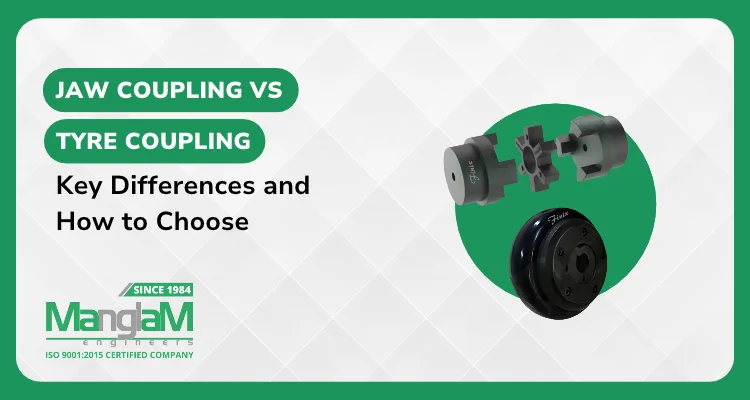
A jaw coupling and a tyre coupling can both join a motor to a pump. A conventional jaw coupling is compact and uses a compression-loaded elastomer spider. A fabric-reinforced rubber tyre coupling (also spelled tire coupling) is typically softer in torsion and can accommodate more misalignment, depending on the model.
If a coupling keeps failing, check whether the coupling type, rating, alignment and element grade match the duty. Startup torque, shock loads, reversing and replacement access can all change the choice even when both hubs fit the shafts.
This guide compares the two designs, explains how to size them and lists the checks to make before ordering or replacing one.
Key Takeaways
- Jaw Couplings Suit Compact, Steady Drives. A jaw coupling transmits torque through an elastomer spider compressed between two hubs, so it fits motor-to-pump and gearbox drives where space is tight and misalignment is limited.
- Tyre Couplings Can Suit Shock and Misalignment. A reinforced rubber tyre flexes between two flanges. Check the selected model’s shock load and misalignment limits.
- Torsional Stiffness Affects the Whole Drive. A softer tyre changes how the drivetrain responds to torque pulses. Engine-driven or reciprocating equipment needs a torsional check.
- Align Both Coupling Types. Excess shaft misalignment loads the flexible element, bearings and seals.
- Replacement Access Can Decide the Choice. A split tyre can be changed radially. A solid jaw spider usually requires axial separation, while a wrap-around element can be removed radially.
- Check Design and Peak Torque. Calculate nominal torque at the coupling, follow the manufacturer’s service-factor method and check transient loads where specified.
- Match the Element to the Environment. Select the spider or tyre grade for the operating temperature and exposure to oil, chemicals or ozone.
- Send the Drive Data. Include power and RPM at the coupling, shaft sizes, duty and available space.
What Is the Difference Between a Jaw Coupling and a Tyre Coupling?
A conventional jaw coupling uses two metal hubs with interlocking jaws and an elastomer spider. A fabric-reinforced tyre coupling uses two flanges connected by a clamped rubber tyre. The jaw design is typically compact and torsionally stiffer. The tyre design is typically softer and can allow more shaft movement.
How Does a Jaw Coupling Work?
In a conventional jaw coupling, the driving hub’s jaws press against the spider lobes, which push against the driven hub’s jaws. The compressed elastomer can cushion shock and damp torsional vibration. Check the model’s limits for angular and parallel misalignment and axial movement.
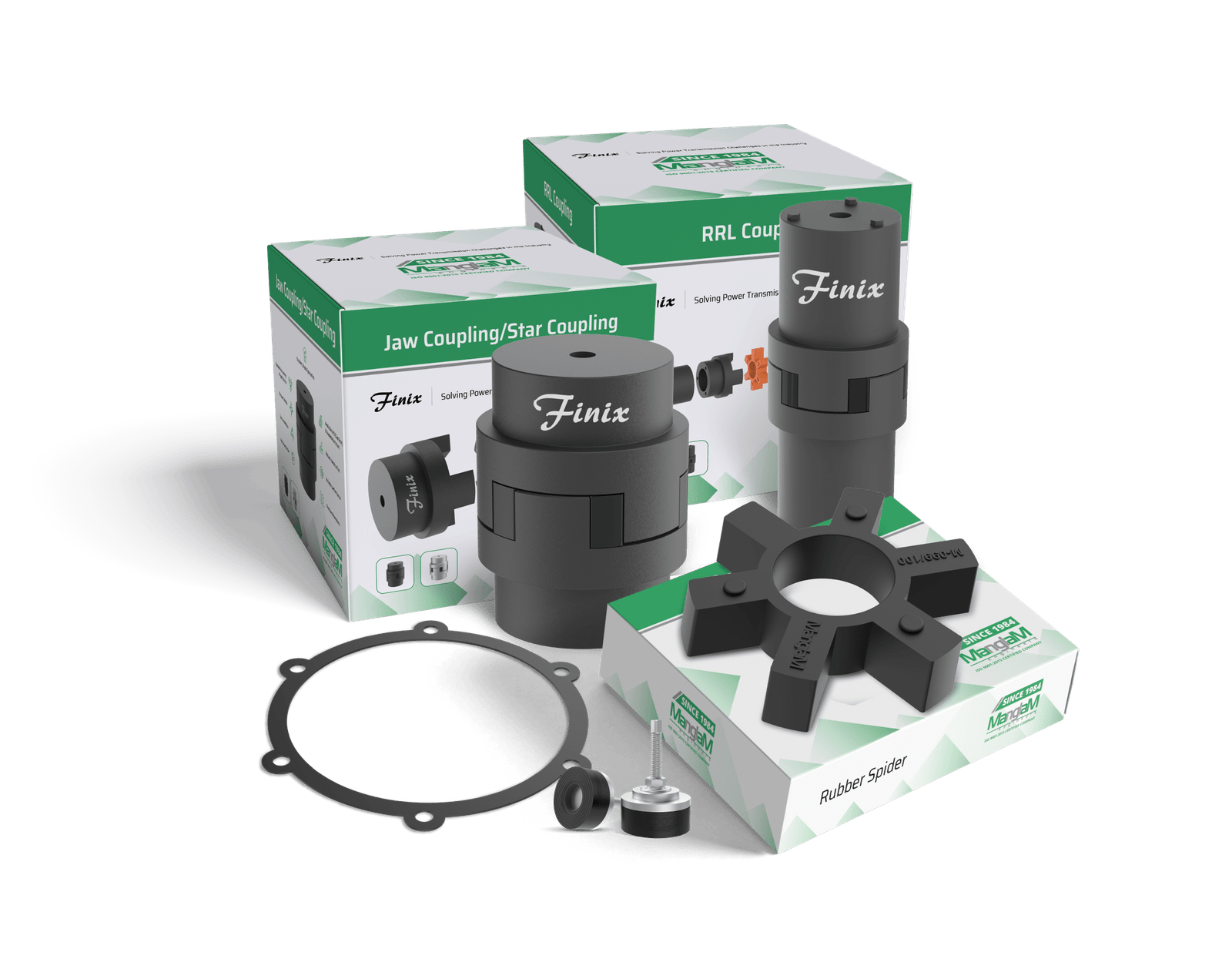
Manglam Engineers’ Finix Jaw and Star Couplings use nitrile rubber spiders. The range also lists a PU Star option. Cast iron and selected aluminum hubs are available. Typical applications include pumps, textile machinery, power plants and construction equipment.
The spider is the wear part. Its grade, size and condition affect how the coupling behaves. For replacements, match the exact hub series and element grade when reviewing the Rubber Spider options.
Some interlocking jaw designs can still transmit torque after the spider fails. Metal-to-metal contact can damage the hubs. Shut down and inspect the coupling if spider failure is suspected.
How Does a Tyre Coupling Work?
A tyre coupling transmits torque through a fabric-reinforced rubber tyre clamped between two flanges. The tyre flexes under load to cushion shock, damp torsional vibration and accommodate limited shaft movement.
The Finix Tyre Coupling uses a split design for radial tyre replacement with the hubs in place. Manglam describes a radial (R) fabric arrangement with lower torsional stiffness and a transverse (X) arrangement for reversing and shock loads. Confirm the tyre construction and ratings for the selected size.
Need Help Choosing Between a Jaw and Tyre Coupling?
Tell Manglam Engineers what the drive connects, how often it starts and whether it sees shock or reversing loads. The team can help narrow down the coupling options.
Discuss Your Coupling RequirementJaw Coupling vs Tyre Coupling Side-by-Side Comparison
Compare the two designs using the current datasheet for each candidate. Check torque, speed and permissible combined misalignment for the specific model and element.
| Criterion | Conventional Jaw Coupling | Fabric-Reinforced Tyre Coupling |
| Torque path | Spider lobes compress between hub jaws | Clamped rubber-fabric tyre flexes between flanges |
| Torsional stiffness | Typically stiffer | Typically softer |
| Shock loads | Check the spider grade and peak rating | Check the tyre construction and peak rating |
| Shaft movement | Typically more limited | Often greater. Verify model limits |
| Space for similar duty | Typically compact | Often larger in diameter. Verify axial length |
| Element replacement | Solid spider typically needs axial separation | Split tyre is removable radially with clearance |
| Typical duty | Steady motor-to-pump, gearbox and fan drives | Drives needing flexibility or radial service access |
| Selection risk | Undersized coupling or unsuitable spider grade | Limited clearance or torsional resonance |
Which Handles Misalignment, Shock and Vibration Better?
A fabric-reinforced tyre often gives more flexibility and room for shaft movement. Compare the exact jaw and tyre models for the load, speed and shaft movement your drive sees.
- Misalignment. Check angular and parallel offset and axial movement in combination. Allow for thermal growth, foundation settlement and soft foot. For a conventional hot alignment check, bring the drive to operating temperature, then shut it down, lock it out and verify isolation before measuring. Refit the guard before restart.
- Shock. Frequent loaded starts, crusher feeds and reversing duty can put repeated peak torque through the element. Compare the candidate models’ peak torque limits and allowed frequency of loading.
- Vibration and torsional behavior. A change in coupling stiffness shifts the drivetrain’s torsional natural frequencies. It can move a resonance into or out of the operating range. On engine-driven or reciprocating equipment, check torsional vibration across the intended speed range before choosing a model.
Does Maintenance Access Change the Decision?
A split tyre can be changed radially with the hubs in place if there is enough service clearance. A solid jaw spider typically needs axial separation. A wrap-around design such as the Finix Snap Wrap Coupling can provide radial access too.
On a pump skid with a fixed baseplate, check how the guard and element will come out. If a machine or hub moves, recheck shaft alignment. After an element failure, verify alignment and inspect the hubs or flanges before restarting.
Replacing a Spider or Tyre?
Share the existing coupling model, element markings or photos, duty conditions and any access restrictions. Manglam Engineers can help identify compatible replacement parts and check the required service clearance.
Check Replacement OptionsHow Do You Choose Between a Jaw Coupling and a Tyre Coupling?
Work through torque, speed, shaft movement, installation space, service access and the operating environment before choosing a model.
- Calculate design torque. Use the transmitted power and RPM at the coupling location, including on a gearbox output. Apply the manufacturer’s service-factor method. See the coupling selection guide for torque and RPM.
- Check peak loads. Confirm the effect of starts, braking, jams and reversals against the applicable peak or cyclic torque limits. Apply each allowance once.
- Check expected shaft movement. Allow for thermal growth and base movement. Confirm how the manufacturer treats combined angular, parallel and axial limits.
- Check the space envelope. Compare outside diameter, installed length, distance between shaft ends (DBSE) and room to remove the element.
- Plan element replacement. Establish whether the hubs or machines can move and how much clearance is available to remove the guard and withdraw the element.
- Match the element to the environment. Check the compound against the actual temperature, oil, chemicals and weather exposure. For jaw spiders, see the PU and nitrile coupling star comparison.
- Check torsional behavior. Have the drivetrain assessed for resonance on engine-driven or reciprocating equipment.
- Confirm the exact model. Request current torque, speed, bore, keyway and misalignment data. Manglam’s public Tyre Coupling table gives bore and dimensions. Confirm torque and maximum operating speed for the selected size directly with Manglam Engineers.
Other flexible options include a Pin Bush Type Coupling. Compare the alternatives in the guide to power transmission coupling types.
Which Coupling Fits Which Duty?
| Application | Initial Option | Key Check |
| Electric motor to centrifugal pump, steady load | Jaw coupling | Design torque and spider grade |
| Fans and blowers, low shock | Jaw coupling | Operating speed and alignment |
| Diesel or gas engine drive | Select after torsional vibration analysis | Engine excitation across the speed range |
| Mining, cement or steel drives with shock | Compare models rated for the duty | Peak torque, reversing and service access |
| Equipment on a fixed base | Split tyre or wrap-around design | Radial clearance for the element |
| Small drive with tight space | Jaw coupling | Space envelope and bore range |
Use these as starting points and confirm the final model against the actual torque, speed, shock loads and alignment of the drive.
Why Do These Couplings Fail, and What Does Each Failure Look Like?
Misalignment, overload and an unsuitable element grade can all contribute to failure. Rubber dust, a new knock or rising vibration warrants investigation. Isolate and lock out the drive before removing the guard or inspecting the coupling.
| Symptom | Possible Causes | What to Check |
| Fine rubber dust near the guard | Wear from misalignment, overload or rubbing | Alignment, element wear and clearances |
| Hard, glazed or cracked element | Heat, age, fluid or chemical exposure | Operating temperature, exposure and element grade |
| Knock at start or reversal | Spider wear, hub movement or loose hardware | Spider lobes, hub fit and fasteners |
| Cracks near the tyre clamp | Excess movement, shock or aging | Alignment, clamp condition, peak torque and tyre age |
| Rising vibration or bearing heat | Misalignment, wear, imbalance or a bearing problem | Element, bearings, alignment and machine mounts |
What Should You Send for a Technical Quote?
Send the driver and driven machine, transmitted power and RPM at the coupling, both shaft diameters and keyways, known running and peak torque, starting or reversing duty, DBSE or space limits, and the operating environment. Include the existing model or drawing for a replacement.
For custom shafts or a restricted installation envelope, include a dimensioned drawing. Share expected shaft movement and available service clearance if known.
Why Manglam Engineers
Manglam Engineers is an Ahmedabad-based manufacturer and exporter of mechanical power transmission couplings and industrial rubber parts. The company states 40+ years of experience and ISO 9001:2015 certification.
Its range includes jaw and tyre couplings, replacement spiders and other elastomer parts. Manglam also reviews custom requirements for the industries it serves, including pump manufacturing, oil and gas, and pulp and paper.
Conclusion
A jaw coupling is a common starting point for compact, steady drives with limited shaft misalignment. Consider a split tyre where flexibility or radial replacement matters. For either design, confirm the torque, speed, element grade, alignment limits and service access for the exact model.
Need a Coupling Sized for Your Drive?
Send Manglam Engineers the power and RPM at the coupling, shaft sizes, DBSE or space limits, and any known peak loads. Ask for the current model data and a quote for your duty.
Request a Free QuoteNeed a Coupling Sized for Your Drive?
Send Manglam Engineers the power and RPM at the coupling, shaft sizes, DBSE or space limits, and any known peak loads. Ask for the current model data and a quote for your duty.
FAQs
What Is the Main Difference Between a Jaw Coupling and a Tyre Coupling?
A conventional jaw coupling transmits torque through a compressed spider between two hubs. A fabric-reinforced tyre coupling transmits torque through a rubber tyre clamped between two flanges. The tyre design is generally softer in torsion.
Which Is Better for a Centrifugal Pump?
A jaw coupling is a common starting point for a steady motor-to-pump drive. Where shock loads or service access matter, compare a tyre or wrap-around design using the actual duty and model ratings. An engine-driven pump needs a torsional check before selection.
Can a Flexible Coupling Correct Poor Shaft Alignment?
It can accommodate limited residual movement. Use the equipment maker’s alignment targets and allow for thermal growth. Excess offset can accelerate element wear and increase bearing and seal loads.
How Do I Know When a Coupling Element Needs Replacement?
Follow the model’s wear and damage criteria. Dust, knocking or a change in vibration warrants inspection of the element, fasteners and hubs. Check after an overload and confirm the cause before fitting the replacement.
Does a Tyre Coupling Need Lubrication?
Manglam’s Finix Tyre Coupling needs no routine lubrication. Inspect the tyre and clamp hardware at the intervals specified for the application.
Can Manglam Engineers Supply a Coupling for a Non-Standard Shaft Size?
Manglam considers custom requirements. Send shaft dimensions, torque, RPM, and a drawing or sample so the technical team can confirm feasibility for your drive.
Related Reading